Car Recalls: How to Check Yours and Why Most Go Unrepaired
A safety recall means a manufacturer or regulator has determined that a defect creates an unreasonable safety risk, and the manufacturer must fix it free of charge. Not discounted — free, regardless of the car's age, mileage, or how many owners it has had. There is no expiry on a safety recall remedy.
Despite that, a substantial share of recalled vehicles are never repaired. Notification letters go to the address on record, cars change hands, letters get thrown away, and the defect stays on the road. Checking takes about ninety seconds and it is one of the highest-value free actions available to any car owner.
How do I check if my car has a recall?
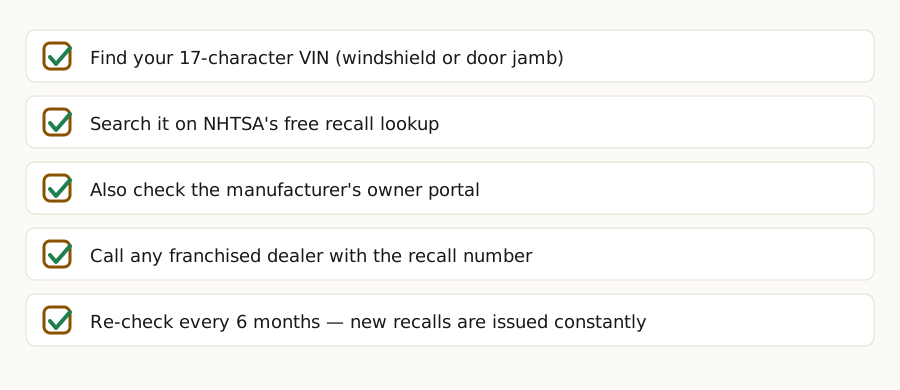
Find your VIN — the 17-character code visible through the windshield on the driver's side, on the driver's door jamb sticker, and on your registration and insurance documents. Then enter it on NHTSA's recall lookup, or your manufacturer's owner site. Both are free, neither requires an account, and both return open recalls specific to your exact vehicle.
Check by VIN rather than by model. Recalls apply to specific production ranges — often a window of a few months at one plant — so 'my model was recalled' and 'my car was recalled' are different statements. The VIN answers the second one.
Then call any franchised dealer for that brand, quote the recall number, and book it. You do not need to have bought the car there. You do not need a service history. The repair is free and the dealer is reimbursed by the manufacturer.
What does a safety recall actually cover?
The remedy is whatever the manufacturer's approved fix is: a replacement part, a software update, an inspection, or in rare cases a buyback. It covers parts and labour completely. If you already paid to fix the exact defect before the recall was announced, you can usually apply for reimbursement — keep the invoice.
What a recall does not cover is consequential damage you decide is related, or other faults found during the visit. A dealer performing a free recall may well identify other work; that work is a normal paid repair and you are under no obligation to authorise it there and then.
Recalls, investigations and service bulletins are three different things
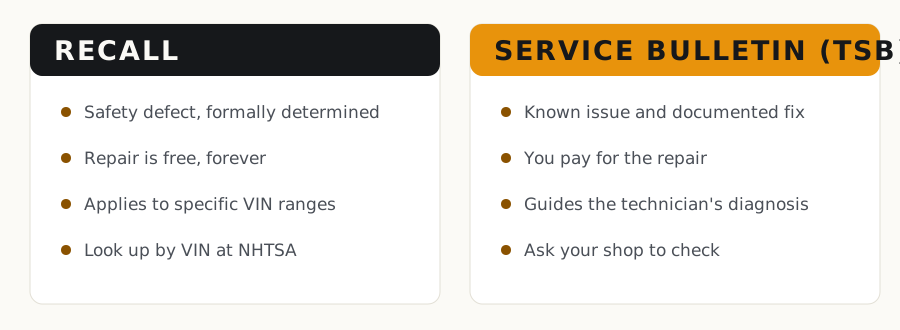
A recall is a determined safety defect with a mandated free remedy. A defect investigation is an earlier stage: regulators have opened a formal inquiry into a pattern of complaints, which may or may not become a recall. An investigation is a strong signal about a known problem, and it is public.
A technical service bulletin is different again — a manufacturer's instruction to dealers about a known issue and its correct repair. TSBs are not safety recalls and the work is not free, but they are enormously useful: if your symptom matches a TSB for your exact vehicle, the manufacturer has already documented the correct fix, which can save a shop hours of diagnosis. Ask whether any TSBs apply to your symptom.
Why should I read complaint data before buying?
Owner complaints filed with regulators are public, searchable by year, make, model and component, and they are the earliest visible signal that a specific vehicle has a systemic problem. Long before a recall exists, the complaint database fills up with the same story told hundreds of times.
For a used car buyer this is unusually actionable. Search the exact year and model, read the top components by complaint volume, and you will know what that vehicle tends to break. That knowledge changes what you inspect, what you ask the seller, and what you offer.
What if the manufacturer refuses the recall repair?
Recall repairs are occasionally delayed for legitimate reasons — most commonly a parts shortage on a large campaign, where manufacturers stage repairs over months and sometimes issue interim advice. That is normal, and you should get a written estimate of timing.
What is not normal is being told a safety recall repair is chargeable, or being refused because you are not the original owner or bought elsewhere. If that happens, escalate: the manufacturer's customer service line above the dealer, and then a complaint to the safety regulator. Recall obligations run with the vehicle, not the owner.
Tools that make this easier
Affiliate links — we may earn a commission at no extra cost to you. How this works.
ANCEL AD310 Classic OBD2 Scanner
The glovebox tool. Wired, no app, no pairing, no batteries — plug it in and it reads and clears engine codes. This is the one that saves you a diagnostic fee the first time the check engine light comes on. Its limits are honest: engine codes only, no ABS or airbag, no live graphing.
Best for: Anyone who just wants to know what the light means
Check price on AmazonAstroAI Digital Tire Pressure Gauge
Tiny, cheap, and it prevents the most common preventable car problem there is. Your dashboard TPMS tells you when something is already wrong; a gauge lets you check before it is. Pressure drops roughly 1 psi per 10°F, which is why winter catches so many people out.
Best for: Everyone — it costs less than one tank of fuel
Check price on AmazonNOCO Boost Plus GB40 Jump Starter
A lithium pack the size of a paperback that starts a car with no second vehicle and no stranger required, and charges a phone besides. It is the single most useful thing in a car emergency kit, and the reason jumper cables have become optional. Recharge it every few months.
Best for: Every car, every climate
Check price on AmazonQuestions people ask
Do recalls expire?
Safety recall remedies do not expire — there is no mileage or age cut-off, and a car recalled fifteen years ago can still be repaired free today, subject to parts availability. Some non-safety warranty extensions and 'customer satisfaction campaigns' do have time limits, which is one reason to check by VIN rather than assume.
Will an open recall fail an inspection or affect insurance?
In most US states an open recall does not directly fail a safety inspection, and it does not generally affect insurance rates. It can affect resale, since buyers who check will find it, and it can matter enormously in a liability sense after a crash involving the recalled component. Practically: it is free to fix, so fix it.
How do I find out about recalls if I bought the car used?
Register your VIN with the manufacturer's owner portal so future notices reach you — this is the step almost every used buyer skips, and it is why so many recall letters go to previous owners' addresses. Then set a calendar reminder to re-check the free VIN lookup every six months.