The check engine light has exactly two modes and they are worlds apart. Steady means a fault is stored: get it read soon. Flashing is the engine computer's only way of shouting — it means at least one cylinder is misfiring so badly that unburned fuel is passing straight into the exhaust, where it burns inside the catalytic converter. Catalysts run at around 800°C when healthy; raw fuel igniting inside them takes them far past that, melting the ceramic core.
The cruel economics: the misfire causing the flash is usually a $200–$500 ignition repair. The catalytic converter it destroys if driven on is $900–$2,800. A flashing light is the cheap problem actively creating the expensive one, in real time, for as long as you keep driving.
What causes check engine light flashing?
Cost bands are broad US independent-shop estimates, parts and labour. Dealers run higher; your car and region move the numbers.
What can I check myself?
- Distinguish flashing from steady with certainty — it changes everything. Flashing may come and go with load, typically under acceleration.
- If it flashes, reduce load immediately: ease off, no hard acceleration, shortest route to stopping. The damage rate scales with how hard the engine works.
- Get the code read before parts get thrown at it. Parts stores read codes free; a P0301–P0306 tells you exactly which cylinder to look at.
- Note whether the engine shakes at idle and whether the exhaust smells of fuel — both confirm the raw-fuel picture.
What should I tell the mechanic?
- Give them the code and ask them to swap the suspect coil to a neighbouring cylinder first — if the misfire follows, it is the coil, proven for the cost of ten minutes.
- Ask for the age and condition of the plugs while they are in there; doing plugs with a coil on a tired engine is sensible, doing all coils because one failed usually is not.
- If the light flashed for a while before you stopped, ask them to check catalyst efficiency (they can watch the rear oxygen sensor) so damage is caught now, not at the next emissions test.
- If a catalytic converter is condemned, ask what evidence — a P0420 alone right after a misfire deserves the full rule-out first.
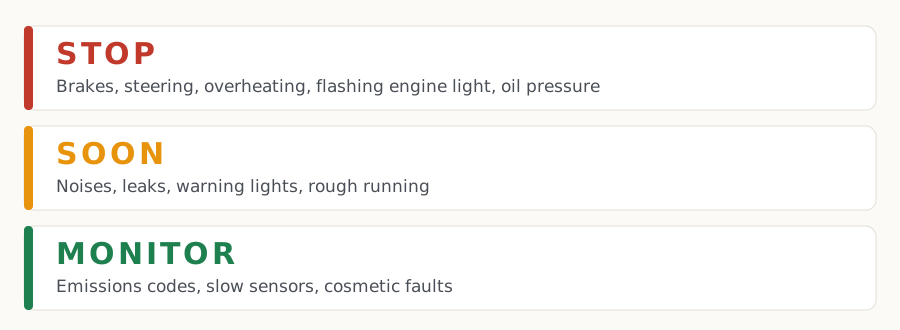
Describe what it’s doing in your own words and the symptom checker gives you a safe-to-drive verdict, ranked causes with costs, and notes to take to the shop — free, no sign-up.
A basic code reader costs around $25 and usually pays for itself the first time a warning light comes on. We compare them in choosing an OBD2 scanner.
Questions people ask
What's the difference between a steady and flashing check engine light?
Steady: a fault is logged, drive normally and get it read within days. Flashing: an active, catalyst-damaging misfire is happening now — stop driving beyond what it takes to get somewhere safe. Same bulb, entirely different instructions.
The flashing stopped. Am I in the clear?
The misfire has paused — often it comes and goes with temperature or load — but the code is stored and the cause is still there. Treat it as urgent-this-week rather than urgent-this-minute, and don't be surprised if it returns under hard acceleration.
How much catalyst damage does a few miles of flashing do?
Unquantifiable from the outside, which is the problem. A brief flash and prompt stop usually costs nothing; miles of sustained misfire under load can finish a converter. The honest answer is that the counter only runs while you drive — so stop running it.