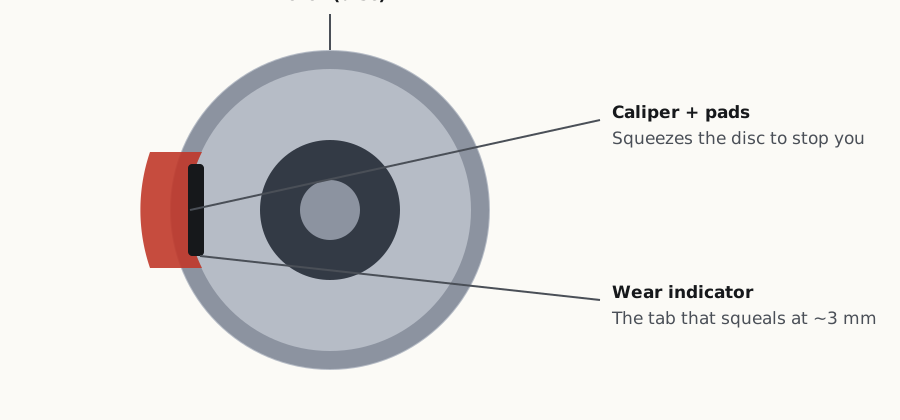
Most brake pads carry a small spring-steel tab set a few millimetres above the backing plate. When the friction material wears down to that level, the tab touches the spinning rotor and sings. The squeal is not damage — it is a component fitted at the factory specifically to make this noise before damage starts. That is why it often squeals while rolling and goes quiet when you actually press the pedal: braking pressure pushes the tab flat.
Not every squeal is the wear tab. Glazed pads, cheap pads, moisture, and dust all squeal too, and the pattern of when it happens tells them apart. The one rule that matters: a squeal that later turns into a grind was the wear tab, and you have used up the warning.
What causes brakes squealing?
Cost bands are broad US independent-shop estimates, parts and labour. Dealers run higher; your car and region move the numbers.
What can I check myself?
- Track the pattern for two days: rolling vs braking, cold vs warm, damp vs dry mornings. That pattern is most of the diagnosis.
- Look at the pad through the wheel spokes. Roughly 3 mm or less of material means the wear tab explanation fits and it is time.
- If it only ever squeals in the first minutes of a damp morning and vanishes, stop worrying about it.
- Squealing that becomes a grind at any point moves this from “this week” to “now” — see the grinding guide.
What should I tell the mechanic?
- Ask for measured pad thickness on every corner, in millimetres.
- Ask whether the rotors are within spec — if they are, you may not need discs with the pads.
- If pads were replaced recently and squeal anyway, ask about hardware, shims and anti-squeal shim paste before agreeing to another set of pads.
- Decline a brake fluid flush bundled in unless they show a moisture or copper test result.
Describe what it’s doing in your own words and the symptom checker gives you a safe-to-drive verdict, ranked causes with costs, and notes to take to the shop — free, no sign-up.
A basic code reader costs around $25 and usually pays for itself the first time a warning light comes on. We compare them in choosing an OBD2 scanner.
Questions people ask
How long do I have once brakes start squealing?
The wear tab is set at roughly 3 mm of remaining pad, which for typical driving is some weeks of use — but wear accelerates at the end, and city driving eats the remainder faster than highway miles. Book it within the week and you will land on the cheap side of the line.
Do squealing brakes mean I need new rotors too?
Not automatically. If you act during the squeal phase, rotors are often still above minimum thickness and can stay. Wait until the grind phase and the rotors are almost always part of the bill — which is roughly the difference between $180–$400 and $350–$700 an axle.
My brand-new brakes squeal. Were they done wrong?
Sometimes, but not necessarily. New pads can squeal during bedding-in, and some compounds — especially harder or ceramic pads — are simply noisier. If it persists past a few hundred miles, hardware, shims or missing shim paste from the install are the usual suspects, and that is a warranty conversation, not a new repair.