The Check Engine Light: A Complete, Non-Panicking Guide
The check engine light is the most misunderstood signal on a car. Some people treat it as a countdown to catastrophe; more treat it as decorative and drive for years. Both are wrong in ways that cost money — the first in unnecessary panic-spending, the second in a cheap fault becoming an expensive one behind a light that was already being ignored.
Here is the honest summary: a steady check engine light means a fault code is stored and you should have it read within days. A flashing one means an active misfire is destroying your catalytic converter right now. That single distinction — steady versus flashing — matters more than everything else on this page.
What is the difference between a steady and flashing check engine light?
A steady light means the engine computer detected a fault, stored a code naming it, and turned on the lamp. The car usually drives normally. The range of causes runs from a fuel cap that did not click shut to a genuinely tired sensor. It is a 'read the code this week' situation, not an emergency.
A flashing light is the computer shouting. It means at least one cylinder is misfiring badly enough that unburned fuel is passing into the exhaust, where it ignites inside the catalytic converter. Healthy catalysts run around 800°C; raw fuel takes them far past that and melts the ceramic core. The cruel maths: the misfire causing the flash is usually a $200–$500 ignition repair, and the converter it destroys is $900–$2,800. Ease off the throttle and stop driving.
How do I get my check engine light code read?
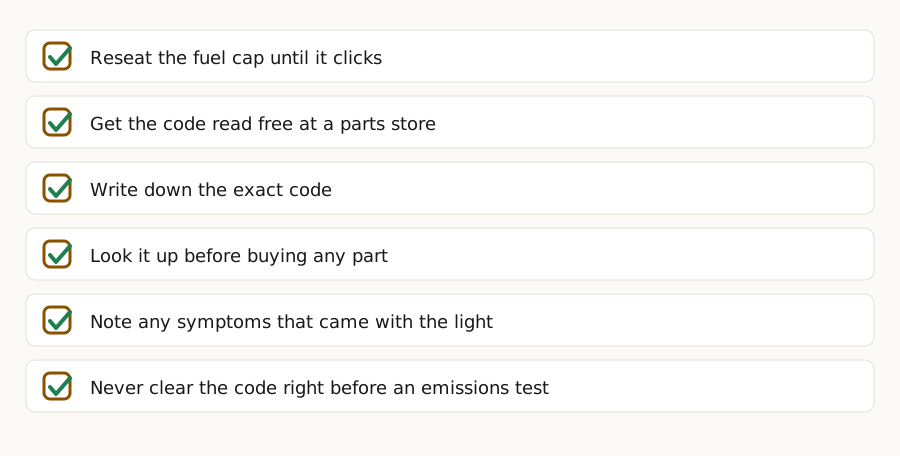
Most US chain parts stores read codes free in under five minutes, and there is no obligation to buy anything. You can also buy a basic reader for around $25 or a Bluetooth adapter that pairs with your phone for around $100. For anyone keeping a car more than a couple of years, that is one of the highest-return purchases in car ownership.
Write down the exact code — 'P0171', not 'the guy said it's the sensor'. The code names a circuit or a system, not always a specific part, which is exactly why the interpretation matters. Then look it up before buying anything: the store's system will suggest the part most associated with that code, and that suggestion is a starting point rather than a diagnosis.
What are the most common check engine light codes?
P0420 — catalyst efficiency below threshold. The most over-diagnosed code there is. Yes, it can mean a worn-out converter. It can also mean a lazy downstream oxygen sensor or a small exhaust leak. Rule those out before four-figure spending.
P0171 / P0174 — system too lean. Usually a vacuum leak or a dirty mass airflow sensor, not a fuel problem. Clean the MAF with proper MAF cleaner ($10) and inspect the intake tube for cracks before anything else.
P0300 / P0301–P0306 — misfire. The numbered versions name the exact cylinder, which is diagnostic gold: swap that cylinder's ignition coil with a neighbour's and see whether the code follows. If it does, you have convicted the coil for free.
P0442 / P0455 / P0456 — EVAP leaks. The fuel-cap family. Reseat the cap until it clicks, then drive normally for a few days and let the system retest itself.
P0128 — coolant below thermostat temperature. The engine is running cold, usually a stuck-open thermostat. Not dangerous, but it costs fuel economy and cabin heat every single day.
What check engine light causes are free to fix?
The fuel cap really is the famous one, and it really does account for a meaningful share of EVAP codes. Remove it, check the rubber seal for cracks, refit until it clicks, and drive normally. The system retests itself over the next few drive cycles and clears its own code, which typically takes two or three days.
Beyond that: cleaning a MAF sensor costs $10 and a paper towel's worth of patience. Checking and reseating connectors after other work is free. And simply reading the code yourself instead of paying for a diagnostic when the fault turns out to be trivial is often the biggest saving of all.
Should I clear the code before an emissions test?
Disconnecting the battery or using a scanner to clear the light does turn the lamp off. It also resets the emissions readiness monitors — a set of self-tests the car must complete before an inspection station will accept the result. Arrive with monitors incomplete and you fail just as surely as arriving with the light on.
Those monitors need a specific mix of driving to complete: cold starts, steady cruising, and a range of loads, typically over several days. So the sequence that works is: fix the actual fault, clear the code (or let it clear itself), then drive normally for a week before the test.
When does a check engine light become urgent?
Upgrade a steady light to urgent if any of these join it: the light starts flashing, the engine shakes or loses power, the temperature gauge rises, you smell fuel or burning, or a red warning light appears. Those combinations mean the stored fault has developed into something with immediate consequences.
The other reason to act promptly is invisible: with the light already on, a second and more serious fault cannot announce itself. The lamp is already lit. That is the real cost of driving around with a check engine light for a year — not the original fault, but everything it hides.
Tools that make this easier
Affiliate links — we may earn a commission at no extra cost to you. How this works.
ANCEL AD310 Classic OBD2 Scanner
The glovebox tool. Wired, no app, no pairing, no batteries — plug it in and it reads and clears engine codes. This is the one that saves you a diagnostic fee the first time the check engine light comes on. Its limits are honest: engine codes only, no ABS or airbag, no live graphing.
Best for: Anyone who just wants to know what the light means
Check price on AmazonBlueDriver Bluetooth Pro OBD2 Scanner
Pairs with your phone and reads far more than engine codes — ABS, airbag, transmission and HVAC on most vehicles — plus live data. The real feature is the repair reports, which map a code to the fixes that most often resolved it on your specific year, make, model and engine. No subscription.
Best for: Owners keeping a car past warranty, or checking used cars
Check price on AmazonOBDLink MX+ Bluetooth OBD2 Adapter
The enthusiast pick. Faster live data than most dongles and it works with a wide range of third-party apps, which matters if you want custom dashboards or logging. Well regarded for connection stability and for not draining the battery when left plugged in.
Best for: People who want live data and app flexibility
Check price on AmazonQuestions people ask
Can I drive with the check engine light on?
With a steady light and a car driving normally, generally yes — get the code read within days. With a flashing light, no: stop as soon as it is safe, because catalyst damage accumulates for as long as you keep driving.
Will the light turn off by itself after I fix it?
Usually. Most codes self-clear after a number of consecutive fault-free drive cycles — the fuel cap case typically takes two or three days of normal driving. A scan tool clears it instantly once the repair is genuine.
Is a $25 code reader good enough?
For reading and clearing engine codes, yes — that is exactly what it does. What cheap readers cannot do is read ABS, airbag or transmission modules, or show live sensor data, which is where a $100 Bluetooth tool earns its money. For most owners the cheap reader answers the question that matters: what is the code?