A steady check engine light is the most over-feared and under-acted-on signal in motoring. It means the engine computer has logged a fault and stored a code naming it. It does not mean the engine is about to fail; the range of causes runs from a fuel cap not clicked shut to a genuinely tired sensor. What it definitely means is that guessing is now optional — a five-digit code exists that names the faulted circuit or system, and reading it is free at most US parts stores.
The trap with a steady light is not urgency, it is drift. The car drives fine, the light becomes furniture, and then a second fault occurs behind it that you cannot see — including the misfire that would flash if the light weren't already on your list of ignored things. Read the code, look it up (this site covers the common ones), and then decide with information.
What causes check engine light steady?
Cost bands are broad US independent-shop estimates, parts and labour. Dealers run higher; your car and region move the numbers.
What can I check myself?
- Remove and refit the fuel cap until it clicks. If the code was an EVAP leak, the light self-clears over the next several drive cycles — the free fix that actually works.
- Get the code read free at a parts store and write down the exact code, not the counter clerk's interpretation of it.
- Look the code up before buying anything. The store will offer the part their system associates with the code; the code names a circuit, not always that part.
- Note any symptoms alongside the light — hesitation, rough idle, smell. A light plus symptoms outranks a light alone.
What should I tell the mechanic?
- Bring the code and ask what testing narrows it to a component — a code is where diagnosis starts, not where it ends.
- Ask whether freeze-frame data (the sensor snapshot stored when the code set) was reviewed; it often reveals the conditions that caused it.
- If the recommendation is an expensive part like a catalytic converter, ask what was ruled out first and how.
- Never pay to have a code cleared without the fault fixed — it returns, and clearing it resets the emissions readiness monitors you need to pass inspection.
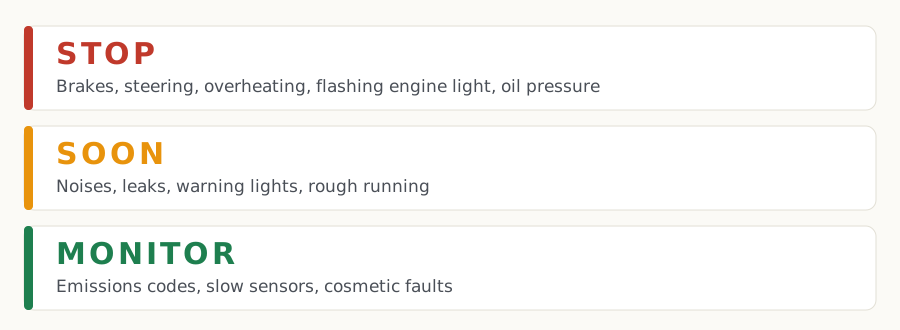
Describe what it’s doing in your own words and the symptom checker gives you a safe-to-drive verdict, ranked causes with costs, and notes to take to the shop — free, no sign-up.
A basic code reader costs around $25 and usually pays for itself the first time a warning light comes on. We compare them in choosing an OBD2 scanner.
Questions people ask
Can I drive with a steady check engine light on?
Generally yes, if the car is driving normally — that is what steady (versus flashing) means. The caveats: get it read within days, not months, and treat any new symptom that joins the light — shaking, smell, power loss — as a promotion in urgency.
Will the light turn off by itself if I fix the problem?
Usually, yes. Most codes self-clear after a number of consecutive fault-free drive cycles — the fuel-cap case typically takes two or three days of normal driving. A shop or scan tool can clear it instantly once the repair is real.
Why did the light come on with nothing wrong with how it drives?
Because most monitored systems are emissions systems, and they fail invisibly. An EVAP leak, a slow sensor, a marginal catalyst — none change how the car feels. The light exists precisely because your senses cannot detect this fault class.