What Actually Belongs in a Car Emergency Kit
Most car emergencies are not dramatic. They are a battery that will not turn the engine over in a supermarket car park, a flat tire on a road with no shoulder, or a windshield you cannot see through. A good kit is built for those, not for a survival scenario.
The other principle worth stating: a kit only helps if it works when you reach for it. Jump starters self-discharge, flashlight batteries die, tire sealant expires. Two checks a year is the difference between equipment and decoration.
What are the five things every car emergency kit needs?
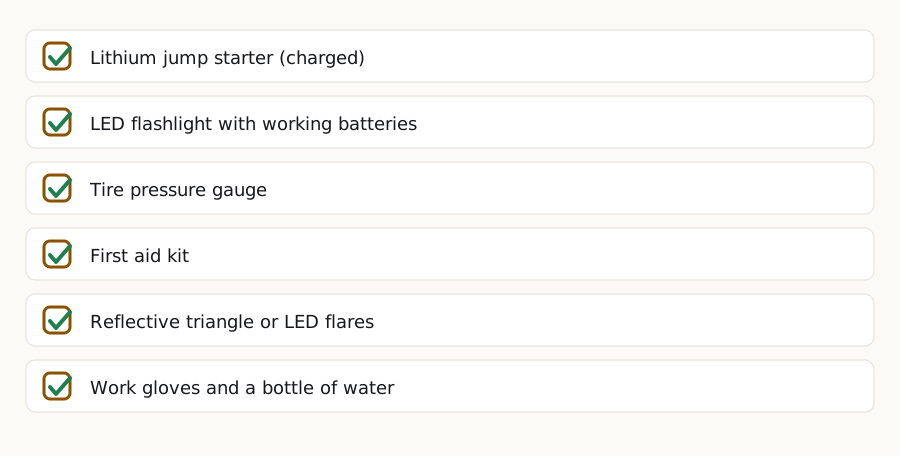
A lithium jump starter. The single most useful item, and the one that has genuinely changed in the last decade. A pack the size of a paperback can start a car by itself, with no second vehicle and no stranger required. It also charges a phone. Keep it charged — every few months is enough.
A proper flashlight. Your phone's light drains the battery you may badly need. A small LED torch with fresh batteries or a rechargeable one costs very little and works in the rain.
A tire pressure gauge. Cheap, tiny, and the tool that prevents the most common preventable failure. Dashboard TPMS warns you when something is already wrong; a gauge lets you check before it is.
A first aid kit. Not a survival kit — plasters, gauze, tape, gloves, and any personal medication.
Warning triangle or LED flares. Required equipment in many places, and the thing that keeps you from being hit while you deal with everything else.
What tire equipment actually gets me moving again?
Many new cars ship without a spare, replaced by a sealant kit and a compressor. Understand what that is: sealant is a get-to-a-shop measure for a small tread puncture, not a repair, and it does nothing for a sidewall tear or a blowout. Some tire shops will decline to repair a tire that has been sealed, so it can convert a repairable puncture into a replacement.
A 12V compressor is genuinely useful independent of punctures — it lets you correct low pressures anywhere, which is the most common tire problem by a wide margin. If your car does have a spare, check twice a year that it is inflated and that the jack and wrench are actually present. A spare you cannot fit is decoration.
What do I need for visibility and weather?
An ice scraper and snow brush if you live anywhere with frost. A microfibre cloth for interior condensation — the difference between wiping a windshield clear and smearing it into a hazard. Winter-rated washer fluid, and a spare bottle in the trunk in the season when you use it fastest.
A blanket earns its space in cold climates specifically: if you are stuck and choosing between running the engine for heat and conserving fuel, a blanket makes that decision less urgent. And if you ever do run the engine while stationary in snow, clear the exhaust pipe first — a blocked tailpipe can push carbon monoxide into the cabin.
Which tools are worth carrying in the car?
Worth it: work gloves, a multi-tool, duct tape, zip ties, and a phone power bank. These solve a surprising range of small roadside problems, and none take meaningful space.
Not worth it for most people: a full socket set, spare belts and hoses, or fluids beyond a litre of oil and some washer fluid. Unless you actually intend to do roadside repairs, they are weight and clutter. The realistic roadside repair list for a non-mechanic is short: jump the battery, inflate or change a tire, top up a fluid, and make yourself visible.
How often should I check my emergency kit?
Twice a year, ideally at the clock changes: charge the jump starter, test the flashlight, check the spare's pressure, look at the expiry date on sealant and first aid items, and swap the washer fluid to the right seasonal rating.
Store it where you can actually reach it — a kit buried under luggage in the trunk is unavailable at exactly the wrong moment. And keep a paper note with your insurance and roadside assistance numbers, because the number you need is the one you cannot look up when your phone is dead.
Tools that make this easier
Affiliate links — we may earn a commission at no extra cost to you. How this works.
NOCO Boost Plus GB40 Jump Starter
A lithium pack the size of a paperback that starts a car with no second vehicle and no stranger required, and charges a phone besides. It is the single most useful thing in a car emergency kit, and the reason jumper cables have become optional. Recharge it every few months.
Best for: Every car, every climate
Check price on AmazonAstroAI Digital Tire Pressure Gauge
Tiny, cheap, and it prevents the most common preventable car problem there is. Your dashboard TPMS tells you when something is already wrong; a gauge lets you check before it is. Pressure drops roughly 1 psi per 10°F, which is why winter catches so many people out.
Best for: Everyone — it costs less than one tank of fuel
Check price on AmazonStreamlight Stylus Pro LED Flashlight
Your phone's torch drains the battery you may badly need, and it is awkward to hold while working. A proper compact light with a clip lives in the glovebox and works in the rain. Unglamorous and genuinely useful at 6am in a car park.
Best for: Glovebox essential
Check price on AmazonAstroAI 12V Portable Tire Inflator
Useful far beyond punctures: it lets you correct low pressures anywhere, which is the tire problem you will actually have. Especially worth it on newer cars that ship with a sealant kit instead of a spare, where being able to reinflate is your only self-rescue option.
Best for: Cars without a spare tire
Check price on AmazonFirst Aid Only 299-Piece Emergency Kit
Not a survival kit — plasters, gauze, tape and gloves for the small injuries that actually happen at roadsides and in driveways. Check the expiry dates twice a year along with the rest of your kit.
Best for: Every vehicle
Check price on AmazonQuestions people ask
Are lithium jump starters safe to leave in a hot car?
Extreme heat shortens lithium battery life and manufacturers generally advise against long-term storage in very high temperatures. In practice most people accept some degradation for the convenience of always having it. In very hot climates, check and recharge more often, and bring it inside during heat waves.
Do I still need jumper cables?
They are a reasonable backup and they never go flat, but they require a second vehicle and a willing driver, which is exactly what you may not have. If you carry one thing, carry the jump starter. If you have room, carrying both costs almost nothing.
How often should I check my emergency kit?
Twice a year is a good rhythm — the daylight saving changes are an easy reminder. Charge the jump starter, test lights, check the spare tire pressure, and look at expiry dates. A kit that has not been checked in three years is mostly a container of expired equipment.