Winter Car Problems: Why Cold Weather Finds Every Weakness
Winter does not really break cars. It exposes what was already marginal, all at once, on the coldest morning of the year. The battery that was weak in August fails in January because cranking demands far more current when oil is thick and chemistry is slow. The tire that was slightly low is now meaningfully low. The washer fluid that was topped up with water is now ice.
That reframing is useful, because it means winter preparation is really just finding weak points before the weather finds them for you. Nearly everything in this guide is a check rather than a purchase.
Why do car batteries fail in winter?
Cold does two things at once: it slows the chemical reaction inside the battery, reducing available current, and it thickens engine oil, increasing the current the starter needs. A battery can lose a substantial share of its cranking power at freezing temperatures while the demand rises — which is why so many batteries die on the first genuinely cold morning rather than gradually.
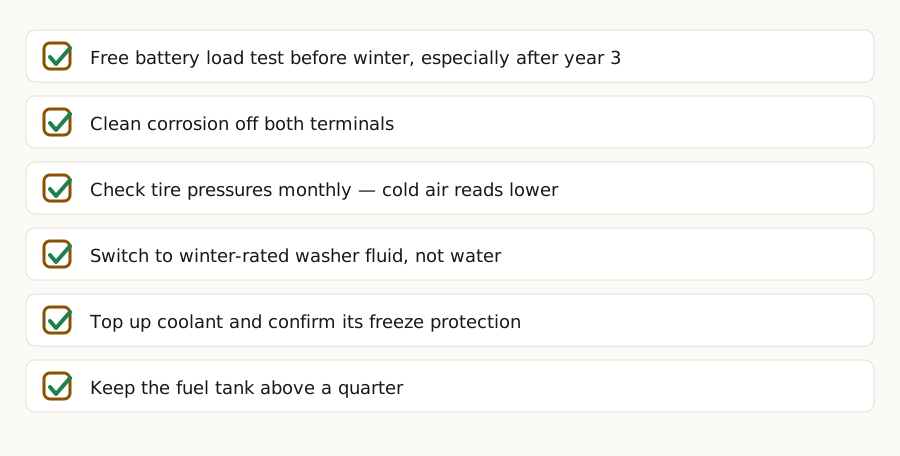
The fix is testing, not hoping. Most parts stores load-test batteries free in a couple of minutes, and the test tells you the measured cold-cranking amps against the rating. If your battery is past its fourth summer, test it in autumn rather than discovering its condition in a car park in January. Also clean the terminals: corrosion adds resistance exactly when the system has no margin to spare.
How does cold weather affect tires?
Air contracts as it cools — roughly 1 psi for every 10°F drop. A tire set correctly in September can be several psi low by December without leaking at all, which costs grip, economy and tire life, and often triggers the TPMS light on the first cold morning. Check pressures monthly through winter, and check them cold.
Compound matters as much as tread on genuinely cold roads. All-season tires stiffen as temperatures approach freezing and lose a meaningful amount of grip; winter tires use compounds that stay pliable and tread patterns designed to bite into snow. If you regularly drive below about 45°F, winter tires are a bigger safety upgrade than most electronic aids — and running them on all four corners is the only sensible configuration.
Which fluids and seals cause winter problems?
Washer fluid topped up with plain water freezes in the reservoir and can crack it, and freezes on the windshield exactly when road salt makes visibility worst. Use winter-rated fluid. Wiper blades that streak in autumn will smear and skip in winter; they are a ten-minute replacement.
Door seals freeze shut after wet weather, and pulling hard tears them. A silicone-based seal treatment prevents it. Locks freeze; a de-icer in your pocket rather than in the locked car is the version of that advice that actually works. And check that your coolant's freeze protection is adequate for your climate — the mixture matters, and a cheap tester reads it in seconds.
Do I need to warm up my car in winter?
Modern fuel-injected engines do not need to be 'warmed up' for long before driving — thirty seconds to get oil circulating is plenty, and gentle driving warms an engine faster than idling does. Extended idling wastes fuel and, on short-trip cars, contributes to the fuel dilution and moisture that shortens oil life.
In genuinely severe cold — sustained temperatures below about -20°F — a block heater changes the equation entirely, keeping the coolant and therefore the oil warm enough that the engine starts and lubricates properly. In those climates it is standard equipment rather than an accessory.
If it will not start in the cold, the sound tells you where to look, the same as any other time of year: rapid clicking is the battery, one loud clunk is the starter, silence points at connections or the immobiliser.
What should I keep in the car for winter?
Winter emergencies are not usually dramatic — they are a car that will not start in a car park, or a road closure that turns a one-hour drive into five. The kit that helps is unglamorous: a jump starter (the lithium packs that live in a glovebox have made jumper cables and a stranger's goodwill largely optional), a blanket, gloves, a flashlight, and something to eat.
Add a snow brush and scraper, a small folding shovel if you live where drifts happen, and traction aids — sand, cat litter or purpose-made traction mats. Keep the fuel tank above a quarter, both because idling for warmth uses fuel and because a fuller tank reduces condensation in the tank.
Tools that make this easier
Affiliate links — we may earn a commission at no extra cost to you. How this works.
NOCO Boost Plus GB40 Jump Starter
A lithium pack the size of a paperback that starts a car with no second vehicle and no stranger required, and charges a phone besides. It is the single most useful thing in a car emergency kit, and the reason jumper cables have become optional. Recharge it every few months.
Best for: Every car, every climate
Check price on AmazonAstroAI Digital Tire Pressure Gauge
Tiny, cheap, and it prevents the most common preventable car problem there is. Your dashboard TPMS tells you when something is already wrong; a gauge lets you check before it is. Pressure drops roughly 1 psi per 10°F, which is why winter catches so many people out.
Best for: Everyone — it costs less than one tank of fuel
Check price on AmazonAntifreeze Coolant Tester Hydrometer
Reads your coolant's freeze protection in about ten seconds. Cheap insurance before winter, because coolant that is too diluted can freeze and crack a block — a repair that ends most cars. Also flags coolant that is simply old and needs replacing.
Best for: Cold-climate owners and anyone topping up with water
Check price on AmazonStreamlight Stylus Pro LED Flashlight
Your phone's torch drains the battery you may badly need, and it is awkward to hold while working. A proper compact light with a clip lives in the glovebox and works in the rain. Unglamorous and genuinely useful at 6am in a car park.
Best for: Glovebox essential
Check price on AmazonSnow Joe Illumisnow 2-in-1 Snow Broom & Ice Scraper
Clearing every window completely is a legal requirement in many places and a visibility one everywhere. An extendable broom reaches the middle of a roof, which matters because snow sliding off your roof onto your own windshield at speed is a genuine hazard.
Best for: Anywhere with frost or snow
Check price on AmazonQuestions people ask
Do I need to warm up my car before driving in winter?
Thirty seconds to a minute is enough for modern engines — long enough for oil pressure to establish. Driving gently warms everything faster than idling, and prolonged idling in the cold actively contributes to fuel dilution of the oil. The exception is clearing your windows completely, which is a visibility and legal requirement, not an engine one.
Are winter tires really worth it?
If you regularly drive below about 45°F, yes — the difference is compound, not just tread, and it shows up most in braking distance on cold or icy pavement. All-wheel drive helps you accelerate; only tires help you stop and turn. Fit all four, and store the summer set properly rather than mixing types across axles.
Why does my tire pressure light come on every cold morning and go off later?
Air contracts when cold and expands as the tire warms with driving, so a marginally low tire dips below the warning threshold overnight and rises above it after a few miles. It is telling you the tires are genuinely a little low — top them up cold to the door-jamb figure and the light should stop appearing.