Blue-gray smoke with an acrid, oily smell means engine oil is getting into the combustion chambers and burning with the fuel. Unlike coolant-white smoke, this is rarely an emergency in the moment — engines can burn oil for years — but it carries a silent risk: the oil being burned is leaving the sump, and an engine run low on oil converts this slow problem into the engine-knock page. The first response to blue smoke is always the dipstick, today, and then weekly.
When the smoke appears is the diagnosis. A puff at startup after sitting overnight points at valve stem seals, which let oil seep down into the cylinders while parked. Smoke under deceleration — lifting off after a long downhill — points the same way, as high manifold vacuum pulls oil past the seals. Continuous smoke that worsens under hard acceleration points lower, at piston rings, which is the more serious end of this family.
What causes blue exhaust smoke?
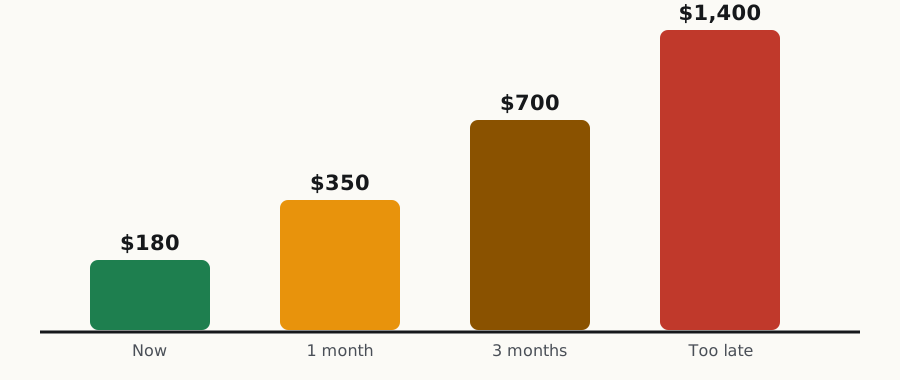
Cost bands are broad US independent-shop estimates, parts and labour. Dealers run higher; your car and region move the numbers.
What can I check myself?
- Check the oil level today and start a log: level and odometer, weekly. Consumption rate is the single number that drives every decision on this page.
- Note the timing: startup puff, deceleration smoke, or constant-under-load. Say that sentence to the shop and you have aimed the diagnosis.
- Find and check the PCV valve if accessible (many just unclip and should rattle when shaken). A gummed one is the best-case answer.
- On a turbo car, pull the intake pipe after the turbo and look for pooled oil — a heavy film points at the turbo seals.
What should I tell the mechanic?
- Report the consumption rate (quarts per 1,000 miles) and the smoke timing — those two facts do half the diagnosis.
- Ask for the PCV system to be checked or replaced first, explicitly, before any internal-engine conversation.
- If rings are suspected, ask for compression and leak-down numbers per cylinder in writing — where the air escapes in a leak-down test literally names the worn component.
- For confirmed ring wear on an older car, ask for the honest menu: live with it and monitor, used engine, or rebuild — with numbers. Living with a quart per 1,500 miles is a legitimate choice.
Describe what it’s doing in your own words and the symptom checker gives you a safe-to-drive verdict, ranked causes with costs, and notes to take to the shop — free, no sign-up.
A basic code reader costs around $25 and usually pays for itself the first time a warning light comes on. We compare them in choosing an OBD2 scanner.
Questions people ask
How much oil consumption is normal?
Manufacturers' official tolerances are generous — some call a quart per 600–1,000 miles “within spec.” Practically: a quart per 3,000+ miles is unremarkable on a mature engine; a quart per 1,000 warrants diagnosis; a quart per 500 is an engine spending its future. The trend matters more than the number — consumption that doubles in a year is telling you something.
Why does it smoke only when I start it in the morning?
Overnight, oil seeps past worn valve stem seals and pools on top of the closed valves. First start burns that pool off in one visible puff, then the engine runs clean because the leak rate is tiny while running. That pattern — dramatic looking, slow actually — is the gentlest fault in this family.
Will thicker oil or an additive stop the smoke?
A grade thicker within the allowed range can reduce seepage past worn seals and modestly cut consumption — a legitimate, cheap mitigation on an aging engine. “Stop smoke” additives thicken oil similarly. Neither repairs anything; both are managed decline, which is a perfectly valid strategy as long as the dipstick is checked like it matters, because it does.