Engines make many noises, and most are cheap. This page exists because one of them is not, and it buys nothing to be gentle about it: a deep, hollow, rhythmic knock from the bottom of the engine that speeds up exactly with the tachometer can be a connecting-rod bearing running out of oil film — metal hammering metal dozens of times a second. From first knock to a rod through the block can be minutes of running, and the difference between a four-figure repair and a scrapped engine is usually just how far it was driven after the noise started.
The good news is that the scary knock has impostors, and they separate on pattern. A light tick that fades as the engine warms is usually valvetrain and often lives for years. A rattle only under acceleration is spark knock — fuel or carbon, fixable. The deep knock that gets louder warm, faster with revs, and arrived alongside low oil or an oil light is the one this page's verdict is written for.
What causes engine knocking?
Cost bands are broad US independent-shop estimates, parts and labour. Dealers run higher; your car and region move the numbers.
What can I check myself?
- Check the oil level immediately, on level ground. A deep knock plus low oil is the emergency combination — do not restart it to “confirm.”
- Match the noise to the tachometer. Exactly engine-speed and rising with revs points internal; independent of revs points external.
- Note top versus bottom of engine and cold versus warm. Top-end, cold, fading = likely valvetrain. Bottom-end, warm, growing = the bad one.
- If it only rattles under acceleration, try a tank of higher-octane fuel — if the rattle softens, you've diagnosed detonation for the price of gas.
What should I tell the mechanic?
- Say the words that matter on the phone: deep or light, top or bottom, does it track engine speed, was oil low. Those four answers set the whole triage.
- Ask for an oil-pressure test with a mechanical gauge — the definitive bearing check, cheap, and it should come before any big verdict.
- If bearing failure is confirmed, ask for the realistic menu: rebuild, used engine, or walk away — with numbers for each. On an older car this is a value decision, not just a repair.
- For a warm-only tick, ask whether an oil and filter change with the specified grade is worth trying before deeper work — it often is.
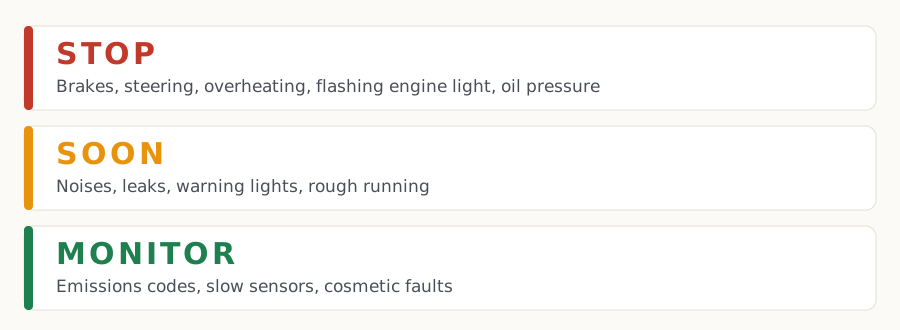
Describe what it’s doing in your own words and the symptom checker gives you a safe-to-drive verdict, ranked causes with costs, and notes to take to the shop — free, no sign-up.
A basic code reader costs around $25 and usually pays for itself the first time a warning light comes on. We compare them in choosing an OBD2 scanner.
Questions people ask
How do I tell a dangerous knock from a harmless tick?
Depth, location, and direction of travel. Dangerous: deep and hollow, from low in the engine, louder as it warms, faster with revs, often with an oil warning. Harmless-ish: light and rapid, from the top, loudest cold and fading warm. When genuinely unsure, treat it as the dangerous one — the cost of over-caution is a tow; the cost of optimism is an engine.
Can I drive to the shop with a knocking engine?
If it is the deep, warm, rev-tracking knock: no — every minute of running grinds the bearing surfaces further and can end with a rod exiting the block. This is one of the few faults where the tow is not conservative advice, it is the cheap option.
Will thicker oil fix a knock?
It can quiet a light valvetrain tick and occasionally hushes early bearing noise — which is exactly why used-car sellers do it. It does not repair anything; the wear continues under the silence. As a diagnostic data point it's fine; as a fix it is a blindfold.