Overheating is the symptom with the worst exchange rate between minutes and dollars. Aluminium cylinder heads warp with sustained heat; head gaskets burn through; in the worst case the engine seizes. Almost every catastrophic overheat bill started as something small — a $20 hose, a $200 thermostat — that was driven on because the destination was close.
The first move is always the same: heater on full hot and full fan (it dumps engine heat into the cabin), pull over, engine off, and do not open the radiator cap — the system is pressurised and will flash to steam. What happens after the 30-minute cool-down is where diagnosis starts, and the pattern of when it overheats does most of the work.
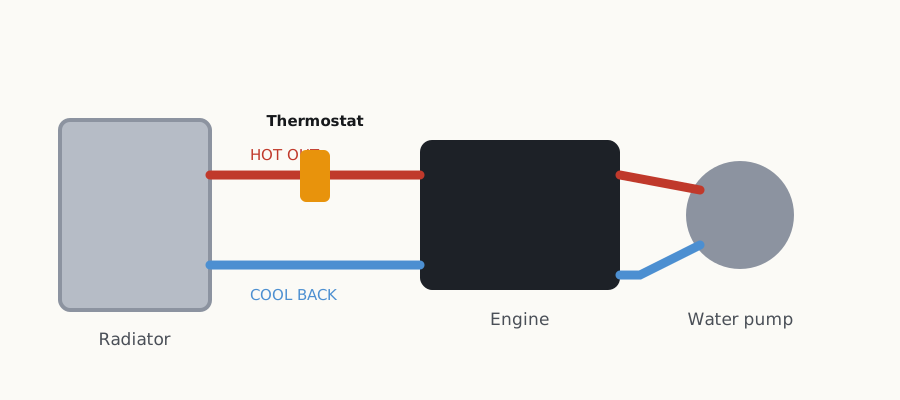
What causes engine overheating?
Cost bands are broad US independent-shop estimates, parts and labour. Dealers run higher; your car and region move the numbers.
What can I check myself?
- Once fully cold — 30 minutes minimum — check the coolant level in the translucent reservoir against MIN/MAX. Low means it went somewhere; find the where.
- Look under the car and over the engine bay for coloured residue: coolant dries to a pastel crust exactly where it escaped.
- Note the pattern. Traffic-only overheating is the fan; fast overheating from cold is the thermostat; gradual creep on long drives with dropping coolant is a leak.
- Check the oil filler cap. A milky, mayonnaise-like film underneath can mean coolant in the oil — stop driving entirely and say those words to the shop.
What should I tell the mechanic?
- Ask for a cooling-system pressure test — it finds leaks in fifteen minutes that guessing cannot.
- If a head gasket is suggested, ask for a combustion-gas (block) test result in writing before agreeing. It is a cheap chemical test and it separates a $400 repair from a $3,000 one.
- Ask whether the thermostat and coolant are included in whatever repair is quoted — reusing old coolant after opening the system is corner-cutting.
- If the water pump is due by mileage and shares a timing belt with the engine, doing them together saves the whole labour bill twice.
Describe what it’s doing in your own words and the symptom checker gives you a safe-to-drive verdict, ranked causes with costs, and notes to take to the shop — free, no sign-up.
Tools that make this easier
Affiliate links — we may earn a commission at no extra cost to you. How this works.
Antifreeze Coolant Tester Hydrometer
Reads your coolant's freeze protection in about ten seconds. Cheap insurance before winter, because coolant that is too diluted can freeze and crack a block — a repair that ends most cars. Also flags coolant that is simply old and needs replacing.
Best for: Cold-climate owners and anyone topping up with water
Check price on AmazonANCEL AD310 Classic OBD2 Scanner
The glovebox tool. Wired, no app, no pairing, no batteries — plug it in and it reads and clears engine codes. This is the one that saves you a diagnostic fee the first time the check engine light comes on. Its limits are honest: engine codes only, no ABS or airbag, no live graphing.
Best for: Anyone who just wants to know what the light means
Check price on AmazonQuestions people ask
How far can I drive an overheating car?
Practically: to the shoulder. The gap between “running hot” and “warped head” can be under ten minutes of continued driving. If the needle drops back to normal with the heater trick, short careful hops with the heater blasting can get you somewhere safe — but the destination should be a shop, not the original plan.
It only overheats in traffic and it's fine on the highway. Why?
At speed, air rams through the radiator whether the fan works or not. Stopped, the fan is the only airflow — so a dead fan, fan relay or fan temperature switch shows up exclusively in traffic. It is one of the most reliable pattern-diagnoses in this whole site.
Can I just keep topping up the coolant?
Briefly and knowingly, as a limp strategy to reach a repair — not as a lifestyle. You are re-feeding a leak that is getting worse, and if the level drops without any puddle appearing, the coolant may be going through a failing head gasket into the cylinders, where topping up is actively masking the evidence.