Of every lamp on the dashboard, the red oil can is the one with no negotiating position. It doesn't mean the oil is low-ish or due for a change; it means oil pressure has fallen below the threshold at which the crankshaft and camshaft bearings maintain their protective film. Below that film, hardened steel rides directly on soft bearing metal at thousands of RPM, and the wear rate is not gradual — bearing surfaces that took 150,000 miles to polish can be destroyed in under a minute of running.
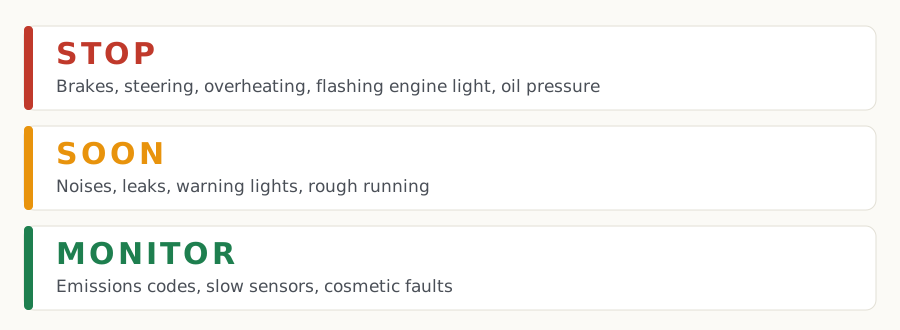
So the procedure is absolute: light on, pull over now — shoulder-now, not exit-in-a-mile — and shut the engine off. Then, and only then, diagnosis begins, and it starts with the dipstick, because the single most common cause of a genuine low-pressure event is simply not enough oil in the engine, and that one is fixable at the roadside for the price of a couple of quarts.
What causes oil pressure light on?
Cost bands are broad US independent-shop estimates, parts and labour. Dealers run higher; your car and region move the numbers.
What can I check myself?
- Off the road, engine off, then wait a few minutes and check the dipstick. Low or empty is your answer and your fix-enough-to-move: fill to the mark before considering any restart.
- If the level was fine: the fault is pressure, not quantity, and the car gets towed — a mechanical gauge test at a shop is the next step, not a restart to “see.”
- If you refilled a low engine: on restart, the light must go out within a couple of seconds. If it stays on, off again, tow — the pickup may be sludged or the low-oil running may already have taken its toll.
- Note whether the light flickered at idle for days beforehand — that history points at marginal pressure (pump, wear) rather than a sudden event, and the shop should hear it.
What should I tell the mechanic?
- Ask for a mechanical oil pressure test — a real gauge threaded into the engine — as the first act; it's the only evidence that separates a $150 sensor from a dying engine.
- Give the history: any flicker at hot idle, oil consumption rate, when the oil was last changed and with what. Each shapes the probability list.
- If the sensor is condemned, ask what the measured pressure actually was at idle and at 2,000 RPM — keep those numbers; they're the engine's blood pressure reading.
- If bearing wear is the verdict on an older car, ask for the honest menu with numbers — heavy-duty oil and gentle driving as managed decline, used engine, or goodbye. All three are legitimate; only the unexamined fourth (ignore the light) is not.
Describe what it’s doing in your own words and the symptom checker gives you a safe-to-drive verdict, ranked causes with costs, and notes to take to the shop — free, no sign-up.
A basic code reader costs around $25 and usually pays for itself the first time a warning light comes on. We compare them in choosing an OBD2 scanner.
Questions people ask
The oil light came on but the engine sounds fine. Can I drive home?
No — and “sounds fine” is exactly the trap. Bearing damage during a low-pressure event is silent while it happens; the knock arrives after the damage is done. The light is the substitute for the sound you can't hear yet. Shoulder, off, dipstick — then either refill or tow. Home has never been worth an engine.
What's the difference between the red oil light and an oil change reminder?
Everything. The amber wrench or “OIL LIFE” message is a maintenance clock — book a service. The red oil can is a live pressure alarm — stop now. They share a fluid and nothing else. If you're unsure which you're looking at, treat it as the red one until you've stopped and checked; that mistake costs minutes, the opposite mistake costs an engine.
The light only flickers at stoplights when the engine is hot. Is that serious?
It's the early chapter of serious. Hot oil is thin and idle RPM is the pump's weakest moment, so marginal pressure — from wear, a tired pump, or a sludged pickup — shows there first. The engine is telling you its pressure margin is nearly spent. A mechanical gauge test now, while it's a flicker, is how this stays a repair instead of becoming a replacement.