Leaks and Overheating: Identify the Fluid, Then the Urgency
A spot on the driveway is the most diagnosable symptom in motoring, because fluids identify themselves. Colour names the fluid, position names the system, and how fast it spreads names the urgency. A flattened cardboard box under the car overnight turns 'my car is leaking' into 'engine oil, rear of the pan, about a drop an hour' — a sentence a shop can price over the phone.
Overheating is the other half of this page and it has the worst exchange rate between minutes and dollars of any fault. Aluminium heads warp, gaskets burn through, and in the worst case the engine seizes — and nearly every catastrophic overheat began as a $20 hose that got driven on because the destination was close.
How do I identify a fluid leak under my car?
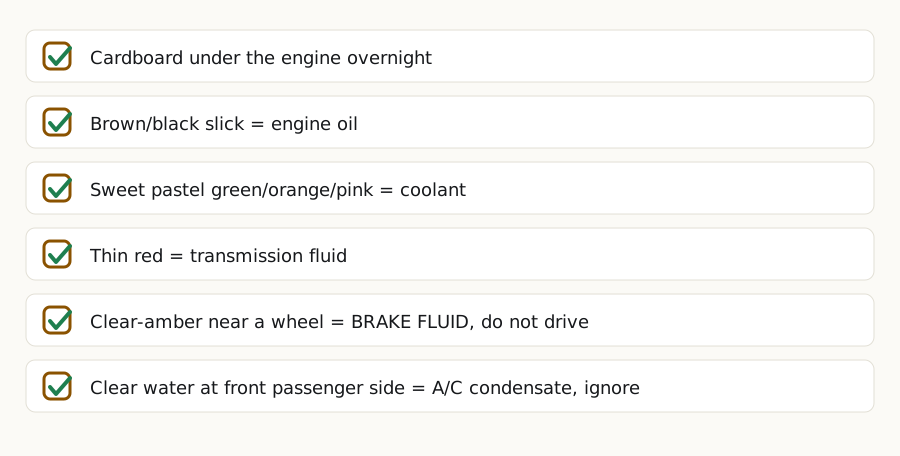
Slide flattened cardboard under the engine overnight, positioned so you can map spots to systems in the morning. Then read it. Brown-to-black and slick is engine oil, and it sits under the front third of the car. Bright green, orange or pink and slightly sticky with a sweet smell is coolant. Thin red is transmission fluid, usually mid-car or near the cooler lines at the radiator.
Clear-to-amber and thin near a wheel is brake fluid — the one entry on this list that stops the conversation and starts a tow. And clear, odourless water under the front passenger area on a warm day is air conditioning condensate, which is completely normal and probably the most-googled non-problem in car ownership.
What should I do if my car overheats?
Heater to full hot and fan to maximum — this genuinely works, because the heater core is a second radiator dumping engine heat into the cabin. Then pull over as soon as it is safe and shut the engine off. Do not open the radiator cap; the system is pressurised and the coolant will flash to steam.
After a thirty-minute cool-down, check the coolant level in the translucent reservoir and look for pastel crust marking where coolant escaped. What happens next depends on whether you find a leak, but the rule that saves engines is simple: the destination should be a shop, not the original plan.
The pattern tells you the cause
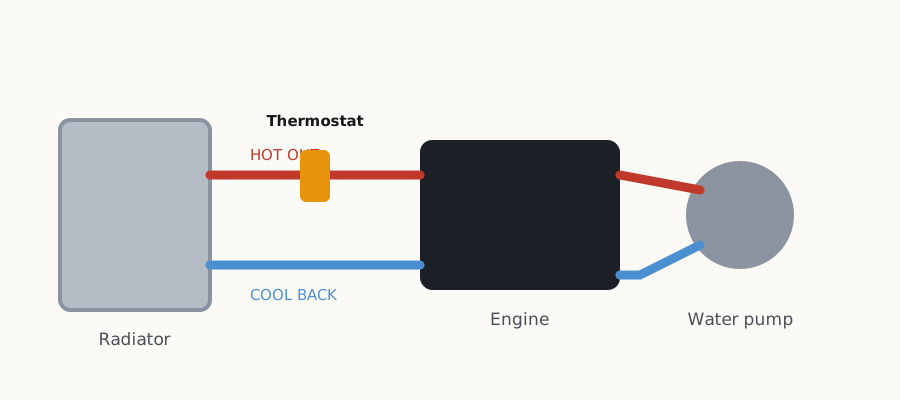
Overheats in traffic but fine on the highway: the cooling fan is not running. At speed, air rams through the radiator whether the fan works or not; stopped, the fan is the only airflow. That pattern points at a failed fan, fan relay or temperature switch with unusual reliability.
Overheats quickly from cold, within ten minutes, often with a top radiator hose that stays oddly cool: the thermostat is stuck closed and coolant is not circulating. Gradual creep on long drives with a dropping coolant level: a leak. Coolant vanishing with no puddle, white sweet exhaust smoke, or bubbles in the reservoir with the engine running: the head gasket conversation, which deserves a combustion-gas test before anyone quotes four figures.
Which car fluid leaks are urgent?
Brake fluid is the absolute stop. Coolant is on a countdown, because small leaks grow and an engine's tolerance for running dry is minutes rather than miles. Transmission fluid matters more than people think: automatics are intolerant of low fluid, and driving a leaking transmission low is how a $300 leak becomes a $3,000 rebuild.
Engine oil is the one where 'monitor it' is often the honest answer. A slow weep on an older engine that costs ten dollars of oil a year may not justify a six-hundred-dollar gasket job — as long as you actually check the level, on a schedule, like it matters. What turns that reasonable decision into a ruined engine is forgetting to look.
What to ask the shop
For any leak, ask them to identify the origin, not just the lowest wet point — fluid travels along the engine before it drips, and a dye-and-UV-light test finds the source properly. For overheating, ask for a cooling system pressure test, which finds in fifteen minutes what guessing cannot.
If a head gasket is suggested, ask for a combustion-gas (block) test result before agreeing. It is a cheap chemical test on the coolant and it separates a $400 repair from a $3,000 one. And if the repair is confirmed, ask whether the head will be checked for warp — skipping the machine-shop check is how head gasket jobs get done twice.
Questions people ask
How far can I drive an overheating car?
Practically: to the shoulder. The gap between 'running hot' and 'warped cylinder head' can be under ten minutes of continued driving. If the needle drops back to normal with the heater trick, short careful hops can get you somewhere safe — but the destination should be a repair shop, not the rest of your day.
There's a puddle but I can't tell what it is. What now?
Colour and position do most of the work, and the smell finishes it: coolant is sweet, oil is not, brake fluid is thin and slightly oily with a distinctive smell, and transmission fluid is red and thin. If it is genuinely ambiguous, dab it on a white paper towel — the colour reads far more clearly against white than against a driveway.
Is it worth using stop-leak products?
On an old car whose repair quote exceeds its value, a quality product is a legitimate last roll of the dice and occasionally buys months. On a car you intend to keep, it risks clogging the heater core and radiator while the real breach continues. Know which situation you are in before you pour anything in.