Exhaust Smoke and Car Smells: Reading What Your Car Is Burning
Smoke colour is one of the most reliable diagnostics in motoring, because each colour comes from a different fluid entering a place it does not belong. White is water or coolant. Blue is oil. Black is unburned fuel. That is nearly the whole system, and it means a glance in the mirror narrows the problem to one subsystem before anyone opens the hood.
Smells work the same way. Sweet and syrupy is coolant. Acrid and greasy is oil on hot metal. Rotten eggs is the catalytic converter struggling with sulfur. Sharp burning plastic with an electrical edge is the one smell that means stop the car and get out, because wiring fires escalate in minutes.
What does white exhaust smoke mean?
Thin white vapour on a cold morning that disappears within a mile is condensation — water is a normal product of combustion, it condenses in a cold exhaust, and every healthy engine does this. It is more visible in cold, humid weather, and it is not a fault.
Thick white smoke that persists after warm-up, hangs in the air, and smells faintly sweet is coolant burning in the cylinders. That means a breach between the cooling system and combustion — usually a head gasket, sometimes a cracked head, occasionally an intake manifold gasket on engines that route coolant through the intake. The tell that confirms it: coolant level dropping steadily with no puddle anywhere.
What does blue exhaust smoke mean?
Blue-grey smoke with an acrid smell means oil is reaching the combustion chamber. Unlike coolant, this is rarely an emergency in the moment — engines burn oil for years — but it carries a silent risk, because the oil being burned is leaving the sump. The first response to blue smoke is always the dipstick, today, and then weekly.
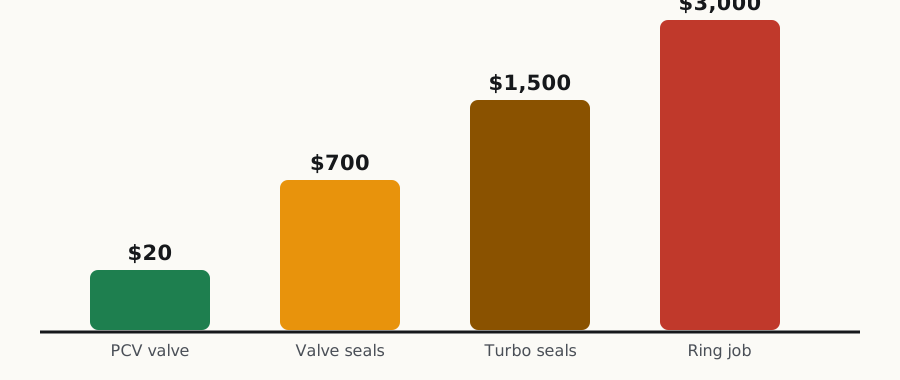
When it smokes is the diagnosis. A puff at startup after sitting overnight points at valve stem seals letting oil seep past while parked. Smoke on deceleration points the same way. Continuous smoke that worsens under load points lower, at piston rings, which is the serious end. And before any of that, check the PCV valve: a $20 part that mimics expensive internal wear when it clogs.
What does black exhaust smoke mean?
Black smoke is soot — fuel that entered the cylinder and could not find enough air to burn. On a gasoline engine that means a rich mixture: too much fuel, or not enough air. Companions include visibly worse fuel economy, a gasoline smell in the exhaust, and often a check engine light with rich-mixture codes.
The cause list starts genuinely cheap. A severely clogged air filter is the five-minute check. After that: a mass airflow sensor reading wrong, a coolant temperature sensor stuck telling the computer the engine is cold forever, a leaking injector, or a failed fuel pressure regulator. Left alone, excess fuel washes oil off the cylinder walls and clogs the catalytic converter — a cheap fault quietly manufacturing an expensive one.
Sweet smells and the heater core
Ethylene glycol smells sweet and syrupy, and a hot engine bay turns a small leak into a scent you notice at stoplights. Where you smell it is the map: outside the car near the front points at the radiator, hoses or water pump; inside the cabin points at the heater core, a small radiator behind the dashboard.
The heater core case has two confirming tells: windshield fog that appears when the heater runs and leaves a greasy film that smears rather than wipes clean, and a damp or sticky passenger footwell. The part is cheap; on many cars the dashboard has to come out to reach it, which is what you are actually paying for. One safety note that matters more than the repair: coolant is sweet-tasting and highly toxic to pets, so clean up every spill properly.
What does a burning smell from my car mean?
Four different faults share one description, and your nose separates them. Burning rubber is a slipping belt or a hose resting against something hot. Acrid burnt oil, strongest after parking, is an oil leak dripping onto the exhaust. A sharp hot-chemical smell after braking hard or descending a hill is the brakes, and after hills in a manual it may be the clutch.
The fourth is different in kind: burning plastic with an electrical edge means insulation melting on overloaded wiring. That one gets the strictest response on this whole site — pull over, everything off, and out of the car if there is any smoke. Wiring fires do not build slowly, and no destination is worth the gamble.
Questions people ask
Is white smoke always a head gasket?
No, and this is the most common overreaction in car ownership. Thin white vapour at cold start that clears within a mile is condensation and completely normal. The head gasket picture is thick, persistent, sweet-smelling smoke plus coolant disappearing with no visible leak. Before accepting a head gasket verdict, ask for a combustion-gas test on the coolant — it is cheap, chemical, and definitive.
How much oil burning is normal?
Manufacturers are generous here — some consider a quart per 600–1,000 miles within spec. Practically: a quart per 3,000+ miles is unremarkable on a mature engine, a quart per 1,000 warrants diagnosis, and a quart per 500 is an engine spending its future. The trend matters more than the number; consumption that doubles in a year is telling you something.
My car smells like gas after I fill up. Normal?
Briefly, yes — vapour around the filler neck dissipates in minutes. A persistent gasoline smell is not normal and deserves prompt attention: it means fuel or vapour is escaping, which is both a waste and a fire consideration. It also commonly sets EVAP codes like P0455, and the first free thing to try is reseating the fuel cap until it clicks.