An automatic transmission is a hydraulic machine: fluid pressure squeezes clutch packs to connect the engine to the wheels. When you feel the engine rev without the car matching (slipping, RPM flare between gears), thumping or banging shifts, or delayed engagement when moving the lever to Drive — the fluid is the first suspect and the first check, because low, burned, or ancient fluid produces every one of those symptoms and is the cheapest thing on this page by an order of magnitude.
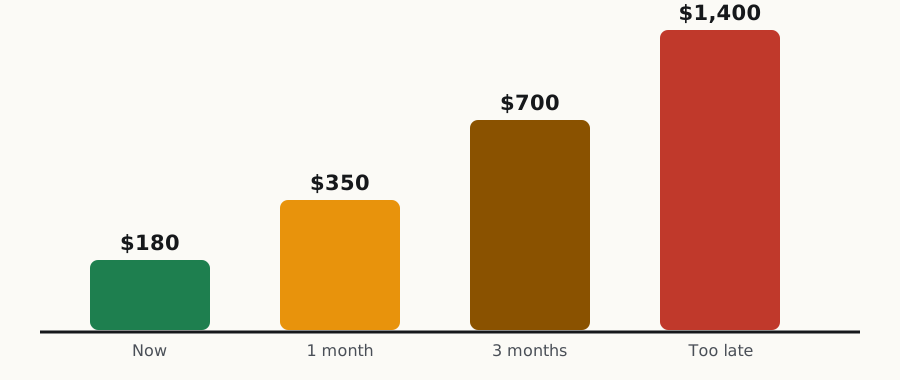
The urgency logic is specific: every slip event drags clutch material off against the plates, and that debris circulates in the fluid grinding at everything else. Slipping is a symptom that manufactures its own worsening. Caught early, the answer is often fluid and a solenoid; ignored for months, the same original fault graduates to a rebuild quote.
What causes transmission slipping?
Cost bands are broad US independent-shop estimates, parts and labour. Dealers run higher; your car and region move the numbers.
What can I check myself?
- Check the fluid if your car has a dipstick (engine warm, running, in Park for most makes — the stick itself says). Level, color, smell: low/dark/burnt each carry a message. Many modern cars have sealed units — then this check belongs to the shop, but ask for the findings.
- Get codes read even without a light — transmission modules store shift-quality codes (P07xx) that name solenoids and ratios precisely.
- Write down the exact behaviour: which gear, hot or cold, gentle or hard throttle. “Flares shifting 2nd to 3rd, only when hot” is targeting data; “shifts weird” is not.
- Look under the car mid-body for thin red fluid — a transmission leak plus slipping is one fault, not two, and the cheap one.
What should I tell the mechanic?
- For any major quote, get the second opinion at an independent transmission specialist, not a general shop — this is the repair category with the widest quote spread in the industry.
- Ask what the fluid looked like and whether the pan was dropped: fine gray paste on the magnet is normal wear; metal flakes and clutch chunks are the real verdict evidence.
- Ask whether a fluid service is a legitimate first step for your symptoms — and note the honest nuance: on a very neglected, high-mileage unit already slipping badly, fresh fluid occasionally accelerates the end. A specialist will tell you which side of that line you're on.
- If a rebuild is quoted, ask for the used-transmission-with-warranty price alongside it — on many cars it's half the money.
Describe what it’s doing in your own words and the symptom checker gives you a safe-to-drive verdict, ranked causes with costs, and notes to take to the shop — free, no sign-up.
A basic code reader costs around $25 and usually pays for itself the first time a warning light comes on. We compare them in choosing an OBD2 scanner.
Questions people ask
Can I drive a slipping transmission?
Gently and briefly, to a diagnosis — knowing every slip event is spending clutch material you can't get back. What you should not do is commute on it for a month “to see”: slipping is self-accelerating, and the price list from fluid-service to rebuild is ordered by exactly how long it was driven.
Is a transmission fluid change risky on high mileage?
The legend has a real kernel: on a badly neglected unit that is already slipping, old fluid's friction-grit is partly what's still gripping, and fresh slippery fluid can reveal how worn the clutches are. On a maintained transmission, changes are purely good. The resolution: if it's already slipping at high mileage, diagnose first at a specialist; don't lead with a flush from a quick-lube menu.
Why does it only act up when hot?
Heat thins the fluid, lowering the hydraulic pressure margin, and expands tolerances everywhere — so a marginal clutch or solenoid that holds when cold slips when everything is hot and thin. Hot-only symptoms are classically early-stage, which is the good news: it's the stage where the cheap fixes still work.