Dashboard Warning Lights: What Each Colour and Symbol Actually Means
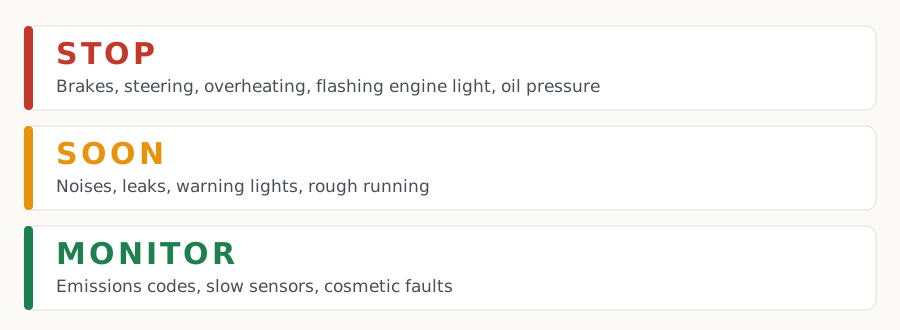
Dashboard lights are a colour-coded language with only three words, and once you know them the panic drops out of the experience. Red means stop — something is failing that can destroy the car or endanger you within minutes. Amber or yellow means a fault is stored and attention is needed, but the car is not about to hurt itself. Green and blue are information, not warnings.
The complication is that the two most-seen lights — the check engine light and the battery light — are both routinely misread. A steady check engine light is a stored fault; a flashing one is an active emergency. The battery light does not mean the battery is bad; it means charging has stopped and you are running on a countdown. This guide covers what each light means, what it costs, and where the popular understanding is wrong.
What do red and amber warning lights mean?
Red lights are reserved for conditions that damage the car or compromise your safety immediately: oil pressure loss, overheating, charging failure on some models, and brake system faults. The correct response to a red light is to get off the road safely and stop the engine. Not 'finish the trip carefully' — stop. The oil pressure light in particular is measured in seconds of running, not miles.
Amber lights mean a system has logged a fault and wants attention within days. The car will usually drive normally. The one amber light that behaves like a red light is a flashing check engine light, which reports an active misfire dumping raw fuel into the catalytic converter — a $300 ignition problem actively creating a $2,000 exhaust problem while you drive.
Steady or flashing check engine light — what is the difference?
A steady check engine light means the engine computer has stored a diagnostic trouble code. It could be a fuel cap that did not click shut. It could be an oxygen sensor at the end of its life. The important point is that guessing is optional: the code exists, and most US parts stores read it free in under five minutes.
A flashing check engine light is the computer's only way to shout. It means at least one cylinder is misfiring badly enough that unburned fuel is reaching the catalytic converter, where it ignites and melts the ceramic core. Catalysts run near 800°C when healthy; raw fuel takes them well past it. Reduce load, get off the road, and do not push on.
The oil pressure light is not the oil change reminder
These are confused constantly, and the confusion is expensive. The amber wrench or 'OIL LIFE' message is a maintenance clock counting down to a service. The red oil can is a live pressure alarm meaning the crankshaft and camshaft bearings are no longer being protected by an oil film. Bearing surfaces that took 150,000 miles to polish can be destroyed in under a minute of running dry.
If the red light comes on: pull over now, shut the engine off, wait a few minutes, and check the dipstick. Critically low oil is the most common and most fixable cause — two quarts at a gas station can save the engine. If the level is fine, the car gets towed, because the remaining possibilities are a failed sensor (cheap, common) and genuine pressure loss (catastrophic), and only a mechanical gauge test tells them apart.
The battery light means charging stopped, not that the battery is bad
When the battery-shaped light comes on, the alternator has stopped replenishing the battery and the car is running on stored charge — typically thirty to ninety minutes of driving, less at night with headlights and blower running. The car feels completely normal while that countdown runs, which is what makes this light deceptive.
Shed electrical load, keep the headlights if you need them, and drive directly somewhere useful. If the temperature gauge starts climbing at the same time, the serpentine belt has broken — it drives the alternator and, on most engines, the water pump too — and the situation has switched from electrical to thermal, which is measured in minutes.

ABS, traction and stability lights
These usually arrive together, because they all drink from the same wheel-speed sensor data. One silent sensor stands down the whole chassis-electronics suite. Your brakes still work normally; what you have lost is the anti-lock function and stability control — the systems you only meet in an emergency.
That asymmetry is why these lights get ignored and why they shouldn't be. Nothing feels different for months, and then one panic stop in the rain behaves like a car from 1985. Wheel speed sensors are typically $100–$300 per corner, and front sensors fail more often because they live in the worst environment on the car.
Questions people ask
Can I drive with the check engine light on?
If it is steady and the car drives normally, generally yes — get the code read within days. If it is flashing, no: stop as soon as it is safe. If any new symptom joins the light (shaking, smell, power loss, temperature rise), treat it as an upgrade in urgency regardless of steady or flashing.
Why did my warning light turn itself off?
Most emissions-related codes self-clear after a number of consecutive fault-free drive cycles — the classic case is a fuel cap you reseated, which clears in two or three days of normal driving. The fault code usually remains stored in memory even after the light goes out, which is why a scan can still tell you what happened.
Is it safe to just clear the code myself?
You can, but a cleared code without a repair returns, and clearing also resets the emissions readiness monitors that inspection stations check — so clearing right before a test guarantees a failure. Read the code, fix the cause, and let the light clear itself or have it cleared after the repair.